2016

I've kept this blog, on and off, since 2006. In 2015 I used it to chart daily encounters, images, thoughts and feelings about volcanic basalt/bluestone in Melbourne and Victoria, especially in the first part of the year. I plan to write a book provisionally titled Bluestone: An Emotional History, about human uses of and feelings for bluestone. But I am also working on quite a few other projects and a big grant application, especially now I am on research leave. I'm working mostly from home, then, for six months, and will need online sociability for company!


Friday, January 26, 2007

And the winner is ...

... Ryan, who spotted the St Louis arch - aka Jefferson National Expansion Memorial - cramped into its snow dome, and snuggled up next to Big Ben and Gaudi's Cathedral, in the "after" shot of the previous post.


You would think the poor child's parents are never at home, though he has bought some of his collection himself. They are not all that practical as travel souvenirs: we brought five big domes home from the US in 2005, and that was about half a suitcase full.

There are a few St Louis readers of this blog who will be horrified to know that until I went to St Louis I had not heard of The Arch; but not many who've made the trip up inside it who will be surprised to know that until I made that ascent I did not really know the meaning of claustrophobia. A tram runs up and down each side of the arch, where each carriage is a tiny capsule seating five people (ten knees all touching) a few steps higher than the one beneath, and then the capsules then ascend like a string of beads, one above the other, till you come out at the top.


The Arch is much larger than it appears in the snowdome (as you might expect) and is a thing of great technical beauty.


And the view is extraordinary.


The Mississippi is also much larger than it appears in the snow dome, where it looks as if the poor boat (in fact, a floating casino) is about to sail off the face of a very flat earth.

Monday, January 22, 2007

Before and After

Dr Cat and Paula have been kind enough to imply that trying to write deathless prose for a book, an essay, and a grant submission on three different topics while at the nadir of radiotherapy treatment and its aftermath might not be the smartest thing I've ever done, in the struggle to find the perfect balance of body and mind. Has this blog taught me nothing?

The trouble for me is that writing, when it's going well — and even when it's more of a struggle — makes me happy and content. But since Paula gave me a firm reality check (and zucchini frittata and blood-plum crumble) on Saturday night, I've done no real work for a couple of days. And here are two photographs to prove it. First, the "before" shot:


And now, the "after":


First person to find the St Louis reference gets a chocolate....

Fortunately my grant collaborators are working at our draft while I recover (though one has a pre-school child and a baby to care for) and the other has a bunch of other applications from his faculty to read and assess.

According to the radiotherapy technicians, the worst of the burning should have emerged by today, so it should start to clear soon. When I was moaning to Paula the other night, I found myself saying I was sick of dragging my body around with me. I shocked myself, as I normally feel rather more integrated and connected than that. No wonder it's hard to work.

Friday, January 19, 2007

Dr Octopus says....


heh heh heh

Wednesday, January 17, 2007

The Last Dance

Fifty-one calendar days and thirty-three radiotherapy sessions later, I've handed back my robe, distributed my chocolates (Lindt balls, naturally) to the other lockers, and been given my marching orders by the technicians and the nurses at reception. The message was clear: don't come back.

Paul set off early on his long-delayed trip to East Timor this morning, and my parents drove up from Grovedale to take me in to the hospital, bringing thoughtfully prepared pies and meals Joel and I can either heat and eat, or freeze for later. Example: a chicken and leek pie in a throw-away tinfoil case (no cooking; no washing up). They also brought me a fabulous present: a soft blue and white mohair throw-rug of dreamy lightness for my afternoon nap. It will be like sleeping in a cloud. OK, better for days when they aren't invoking the 'extreme heat' rule at the Australian Open tennis down the road, but still.

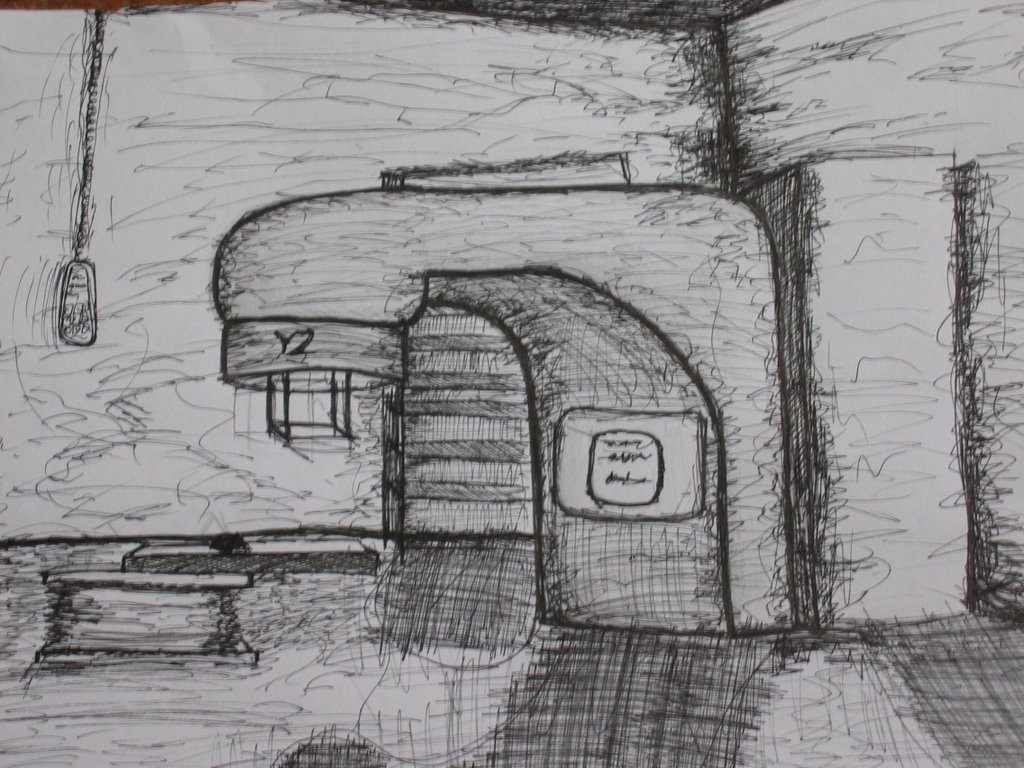
Joel, who has come to at least half the sessions with me, also brought the radiologists a present, a drawing he did over the weekend, from memory, of the second machine, viz:


Robyn and Peter will cook risotto for us tonight. And yesterday, when the temperature soared above 40, Paul's mother came and stood for hours in our sunny living room ironing right down to the bottom of the laundry baskets. At one point, it was so hot she moved the ironing board into the bathroom where it was slightly cooler. And it's not as if Jean doesn't have her own health problems. This was an act of love indeed: if ironing can save me, I'll live to be a hundred.

So I've finished the radiotherapy; Suzanne doesn't want to see me for nine months; and I think I heard Mitchell utter a cautious sentence yesterday with the word 'cure' in it. I'd give anything to wind back the clock again and listen properly. There are five more years of daily Tamoxifen tablets and monthly Triptorelin injections before he's finished with me, but in any case, I knew after my surgery that my prognosis would be good. Everything's gone smoothly; I've been treated beautifully; and my chances — and they are nothing but chances now — are good. The future looks bright.

I feel dreadful.

I'm a mess of sentiment and emotion. Margot came to the door yesterday afternoon and I fell into her arms sobbing. I started to cry all over the mohair rug today, and even more when Joel put his arm around me and laughed with me. I know I am not alone, too. This afternoon as I was joking with Janine and Barbara at my last session, my mother told me there was an old man in the waiting room, looking frail and holding his head in his hand as he cried quietly. And I saw a young woman in her twenties looking grey and drawn with her healthy, anxious partner looking at me in disbelief as I walked out smiling and joking and saying goodbye. (I still don't really look sick.)

The word I use to myself most often these days is 'overwhelmed'. It takes many forms, but today I keep thinking of the wonder of the body and what it can do. I've had a cluster of abnormal cells develop into a tumour that moved beyond the milk duct but no further into the lymph system. This milk duct also fed the child who was born of another extraordinary division of cells, who is now able to draw a picture of the machine that has helped cleanse me of any stray aberrant ones.

I'm pretty sure that if my case had been more serious, I would have been less willing and able to write about it. In almost every sentence I've written, I've been conscious that my case has been relatively mild. But it's been miraculous, all the same.

Perhaps strangest of all, on such a momentous day, after a sleepless night, I've had a good idea about how to structure the chapters in the Garter book. I've been just chipping away at this project over the last week or so for a few hours in the morning, and think I have found a way to establish different writing registers within the book.

Now ... OK, tomorrow ... it's time to turn attention back to the Piers Plowman essay, and to the re-submission of our big ARC grant. This is going to be pretty terrible, as we had polished and tuned every last detail this year, and now we want to make some changes to the scope of the project, which will affect every paragraph, every budget line, every hyphen-break. Oh well. At least I have my health.

Saturday, January 13, 2007

Interview with the goddess

The air around the temple is clear and blue. The sound of birdsong floats in and out of the columns, and the water in the fountains is crystalline. The priestess summons you into the inner chamber, and takes you through the preliminary mysteries. Then suddenly the goddess appears. It is bright-eyed Athena: statuesque, yet kindly. She asks you about your life. What have you learned? How have you put her gifts of wisdom to use? How will you answer?

...

A few days ago, my friend Paula took me to radiotherapy and then for my three-month “review” with Suzanne, my surgeon. I like it when my friends and family come with me for a radiotherapy session and see me being lined up under the different machines. And I was pleased for Paula to see the breast clinic, in line with my perpetual message to my women friends: don't be afraid.... We check in at reception: Helene, as ever, is wearing a very chic suit and pearls, with her blonde hair piled up in a stylish chignon. There are jelly beans in a glass dish, and a bowl of apples further along the dark wood counter. The waiting room is light and airy, and has interior design magazines, Vogue, literary journals and art books to look at. The paintings and sculptures are original and interesting. The herbal teas in the jars look fresh and inviting. At discreet intervals, the soundscape of birdsong echoes through the large room. Middle-class women sit reading, or talking quietly with friends or partners. One is wearing a close-fitting hat, though it’s 38 degrees outside. A man walks in carrying x-rays. Is he a supportive partner? or one of the 1% of breast cancer patients who are male?

I won’t beat around the bush, here. This is an expensive practice in the private system. I’m here because my GP, Barbara, has been practising in Melbourne for many, many years, and is deeply networked into Melbourne’s medical and surgical elite. Mitchell, the oncologist, serves on the Victorian Medical Board with Bernadette, the surgeon who delivered my child (a complicated footling breech), with Barbara’s assistance, nearly twelve years ago. This service doesn’t come cheaply, and I know how fortunate I am to be here under Barbara’s introduction, and with the capacity to pay for apples and birdsong. And Suzanne.

I have written earlier about my admiration for this woman, and for the things I am learning from her, as well as for her care of me. I’ll be the first to admit I am a little besotted with her. It’s partly the bourgeois process of “choosing” a specialist, an architect, a doctor, a hairdresser, or an academic patron who is fabulous, and hoping their fabulousness will reflect well on us. And I have always loved a good medical melodrama where patients and doctors discuss metaphysical and existential questions in moments of quiet reflection. And after all, Suzanne has saved my life.

Today her first question is about how I am coping. She wants to know what I am doing about my work, my writing, my feelings about all the committees I was struggling with last year. She is pleased when I say I am learning to turn around my priorities: to answer emails later in the day and work in the mornings when I am fresher; to anticipate only a gradual return to full strength and public duties over the next year, once this acute phase of treatment is over, and when I am ready to emerge from my hibernation. She asks how Paul and Joel are coping, and is pleased when I say Paul cancelled all his travel for the rest of the year and has spent as much time at home as possible; and when I report that the three of us have spent more time together as a family over the last few months than for a while.

Only then does she examine me, looking mostly at how the wounds are healing, and asking about the residual numbness in my arm and the back of my shoulder. To my great surprise, she examines the healthy breast carefully, but barely touches the wounded one. I ask when I should begin to start examining my own breasts again, since I know the chance of recurrence is higher in the first few years after the initial diagnosis. Not for about a year, she says, since people are just too nervous to do it properly. She and Mitchell will take care of it between them; and in fact she doesn't need to see me again until October, when I will have a mammogram and ultrasound on the same day. Her complete and utter confidence that she does not need to reassure herself, or me, that there is no discernible lump in my breast, confirms my great faith in her. I feel this is going to be a crucial moment to revisit when I am ready to start building my confidence again. I can see that once visited by the disease, it will be hard to set aside the fear of its recurrence.

Suzanne is charismatic for me because of her quiet authority and stillness in her workplace, in a phase in my life where I feel fragmented and divided from my own. It's no wonder I seek to channel a little Athena-like strength through her.

Wednesday, January 10, 2007

Other stories, other lives

When I first received my cancer diagnosis, I began to think about other women I knew who had breast cancer. Two women I knew of in my faculty; a historian in another state I admire hugely; Kylie Minogue; and then Belinda Emmett, a starlet who died in a Sydney hospital the night Kylie made her first triumphant return, around the time I was having my surgery. And pretty chilling that was for me, too. Sheryl Crow. Linda McCartney. Anastasia. Susan Sontag. Jane McGrath. A second cousin, much younger than I, who's had a complete mastectomy. Fanny Burney, who famously described her mastectomy in 1811, without anaesthesia, feeling the knife scrape down to the bone, but going on to live another seventeen years.

Once I started reading around, I read dozens of other women's stories, in the support literature, and online. And since writing the blog, I've learned of many more: Meredith at Marrickvillia for example, whom I knew years ago at Melbourne. She doesn't write much about her experience with breast cancer last year, but has recently posted a retrospective as she heads off on holiday. Many friends have emailed to tell me their own stories, or those of friends and relations. I'm glad to be part of this company, though I haven't yet considered joining any kind of support group.

What is it possible to learn from these others, and these stories? That sometimes women die of breast cancer if it spreads to other parts of the body and can't be controlled; but sometimes they die much later, quietly in their beds like other people, or in war, or of other diseases, or of stupid traffic accidents. That some women are terrified and shocked when they first hear the news; that many have a much harder time of it than I have had, especially those who undergo chemotherapy and endure complications from side-effects and fertility issues; and that for most it produces some change in the way they live, or in who they are.

Amongst the medievalists, my friends have reminded me of Kellie Robertson, at Pittsburgh, who was diagnosed and treated about seven years ago. I've not exchanged more than a word or two, if that, with Kellie, but I've seen her presenting at conferences, and she is something else. She gives a great talk, and I find her energy and engagement inspiring. I also have her book, The Laborer's Two Bodies, on my desk, as I slowly think about the nature of the acts of writing, as work, and as pleasure, in Piers Plowman.

On the web, I came across Kellie's account of her year with breast cancer here. Her diagnosis, type of tumour, and treatment are all different to mine, and as a much younger woman, cancer raised different issues for her, too. But it was great for me to read her account (partly because it's so bracing and compelling; and partly because we inhabit such similar intellectual and collegial spaces) and also to see from my correspondence with her this week that she has become something of an activist. I've put up a link to the Breast Cancer Action site she directed me to, and I was intrigued to follow its critique of the pink consumerism that surrounds breast cancer in October. Just how much of your donation goes to breast cancer research? and of what kind? to support a drug company? or support networks? or just "awareness"? Do the pink ribbon cosmetic or food or water companies you support use chemicals or packaging that might actually be endangering our health and our environment? This is a big theme on this site: I don't know enough to say more about these concerns, but I think they are good questions to ask.

I've now finished the 25 standard radiation treatments, and started the 8 "booster" shots, just along the scar area. It's a different machine, one that comes much closer as I lie on my side. I saw Michael for my weekly check-up on Monday and he said I had tanned up nicely; and it's true. The area under the breast is no longer pink and burned but is a deep dark tan: I could have been in an ad for Reef Oil as a teenager, and gone very, very brown if I had ever had the patience to lie long enough in the sun. The skin along the scar is still tender and feels burned, though, and the skin on the nipple has started to peel. Ouch. And the other breast seems startlingly smooth and white in comparison. But it's not a medical breast, so I can't write about it here. I'm still doing ok. I now know what radiotherapy fatigue is like, though. Not just sleepiness, but also a feeling that my limbs and my eyelids weigh at least twice as much as they did last week. I'm also growing some rather dark shadows under my eyes. Small prices to pay, I say.

Monday, January 01, 2007

Cricket as Metaphor

I’m not sure of the origins of the idea that cricket is a metaphor for life. But for anyone interested, as I am, in the practice of discourse analysis, ideas of nationalism, medievalism, the relation between individuals and institutions, in rituals, cricket, convalescence and the monarchy, the current Ashes tour of Australia provides fascinating and ample fodder. Note to US readers: England is currently on tour in Australia, to play a “best of 5” series, played every 18 months or so in alternate countries. Each game can last up to five days. Australia leads the current series 4-0 (in a game where a draw is not uncommon). The final test starts in Sydney tomorrow.

Here are the parameters of my interest:

• AS an invalid, I’m allowed to watch as much televised cricket as I like this summer.

• CRICKET commentary (on radio and in print) has long been my delight, for its brilliant and/or hyperbolic use of metaphor and meta-narrative. Shane Warne’s announcement of his retirement after the Sydney game brought out this from Peter Roebuck:

"Shane Warne has been the most extraordinary, exotic and entertaining cricketer the game has known. In his hands, a cricket ball could perform previously unconsidered gyrations, spinning at right angles, skidding like a puck upon ice, changing directions after an initial curl or else dropping sharply to leave the batsman groping at thin air.

"He took a bag of tricks onto the field and dipped into it with the cunning of a rat and the theatricality of a tragedian. And now the end is near. Treasure these last few days as the old rascal pitches another jewel of a leg-break or carts another irreverent 40 or plots another clever dismissal or presides over another imposing performance. Treasure them because we will not see his like again."

• I'VE cherished a long-standing interest in tracking metaphors drawn from medieval culture in sporting discourse (this might even become a Research Topic one day). E.g. Greg Baum on the English capitulation in Adelaide: “Like medieval royals with syphilis, they went suddenly mad. England lost its last nine wickets for 60, the same England that made 6-551 declared in the first innings.”

• THE Ashes rivalry is deeply colonialist: the little urn we fight over contains the ashes of the bales burned by some Melbourne women after Australia first defeated the English in 1882, to signify the death of English cricket, as reported by the English media, thus inaugurating a tradition of the English press savaging any unsuccessful national team. How do sporting teams come to represent the national character? Martin Johnson explains:

"What seemed to catch England unawares here, for reasons that will take a bit of explaining, is that Australia's reaction to losing the Ashes [in 2005] was a bit like Scotland Yard's on discovering that the crown jewels had been stolen.

"The Australians have been intense, intimidating, downright nasty at times, but while they are the equivalent of a long-distance truck driver ploughing on beyond the health and safety regulations, England can only go so far before pulling into the service station for a mug of tea and a kip."

• AS an old game, cricket is replete with an elaborate set of rules and rituals. When any umpiring decision is in doubt, the rule book says “the spirit of the game” should be invoked as the deciding principle. (Note to medievalists: cf. Augustine's rule of "caritas" in scriptural exegesis.) This is ritual practice in action, as the game veers between wanting to modernise itself to attract new audiences, and wanting to uphold its own traditions (cricket thus parallels my interest in English ritual practice and the monarchy’s struggle between tradition and modernity: and yes, the Helen Mirren movie The Queen was made in order to prove my current research thesis on the Order of the Garter). Peter Lalor described Adam Gilchrist taking some beer to the ground staff in Perth after the third test as proof that the Australians are “not only better cricketers, they are morally superior too” (tongue-in-cheek, but nevertheless, printed). Jonathan Agnew’s blog on the BBC website, and his mention of the MBEs awarded to the English team in 2005 attracted the following comment: "I agree totally with MZ, the England team should be ashamed of their efforts, no will to fight etc. They should all hand back their stupid honours from last year’s streaky Ashes win. It just shows what an outdated system both cricket and the honours are in England!"

• MY son has started to play cricket so this summer I am attending training sessions and games of the Edinburgh Under 12s, watching these young boys being taught this “spirit”, and the principles and conventions of the game. In the last game before the January recess I watched one frustrated young batsman calling out to his teammate: “Come on, go out!”, as he could see the innings drawing to a close without getting a chance to bat. There has been some stern lecturing from the coach, an extraordinary 18-year-old, on the protocols of cheering and applauding the successes of both teams.

• AS a game, cricket is curiously poised between individual and team performances, so for people like me, who identify strongly with their workplace and who also compete against themselves, it’s a fascinating analogy played out in public. This isn’t an issue just for the juniors. There was an extraordinary interchange this week between the Australian coach John Buchanan and the middle-order English batsman Kevin Pietersen. Buchanan accused Pietersen of not being a team player, to which Pietersen responded:

"I've also been helping Monty Panesar big-time. It's just ridiculous Buchanan has come out with such a bizarre statement. And if I wasn't a team player, I could say, I've played my part — I've scored 420 runs at an average of 60 but what about the others? But you will never hear that from me. Cricket's a team game."

Oh good; I’m glad that’s clear!

THIS last point, apart from the excesses of the Pietersen case, is the one that resonates most strongly for me this week, as I think about the relationship between my work and my life over the last very odd months, and as I contemplate the idea of re-entry once this intense phase of my treatment is over and I can establish some modest work routines. The achievements of sportspeople are very much more public than the work of academic scholars, yet our successes and failures are equally visible and public to those in our small circles. Is academic culture more, or less forgiving than public sporting culture? In an institutional context where we are made to measure ourselves and our colleagues all the time, what's to stop us all becoming as self-promotional as Pietersen?

Sunday, December 31, 2006

New Year's Eve

I suspect that's the longest gap between postings since I began the blog. It's partly a result of the busyness of Christmas; partly the increasing need for naps and sleep-ins as the radiotherapy comes to the pointy end. Something new, and not altogether pleasant seems to be happening in the relationship between work and living and reading and writing, too.

A quick health update, first: I have five more big radiotherapy sessions to go, then eight shorter, lighter doses to be directed along the scar line. I was measured up for these before Christmas. I feared going into the CT tunnel again (I always forget till it's too late that I hate enclosed spaces and low ceilings), but this was more low tech. Lie on your side, Michael will draw on you with blue pencil, and then Andy will come in and make a tracing onto a transparent sheet then take a photo (I almost said polaroid, but it looked suspiciously like my own digital camera).

My breast is starting to resemble a roasted beetroot: pink and brown in patches, within a sharply delineated area which probably looks square on the infra-red grid when I'm lying down, but which on the body is curved into odd angles. I'm assured this will all start to fade as soon as the treatment ends, but right now it feels pretty much like sunburn. I woke in the middle of the night last night saying to myself, 'I don't know what to do with it!', where to put it in the bed, as if it were a detachable appendage. I had also been dreaming that Kylie Minogue paid me a visitation and delivered some wise words I was not able to remember. So I got up, had a chamomile tea, then went back to bed and slept in till 10.00. We had breakfast in bed (cereal, raspberries and blackberries) and made a plan for the day. Paul went to work in the garden and at his computer; Joel set to work on his new animation; and I lingered on reading Garrison Keilor's Love Me, about a Minnesota man who moves to New York and fulfils his dream working at the New Yorker until he develops writer's block and the magazine is taken over by the Mafia.

I'm sometimes asked what I'm doing, how my own writing is going, how much trash TV I'm watching. In fact, I spend a lot of time in the garden, feeding the goldfish and admiring their babies, and talking to Mima, my fifteen-year-old tabby. We have become very close over the last few months and have had many happy conversations on the couch in the afternoon sun or walking around the new garden and its fishponds. No trash TV: we are working our way through the West Wing on DVD in the evenings, and watching some very short cricket matches in the afternoon. I'm as keen for a 5-0 Ashes victory as the next woman, but it'd be good to see the English team defer their inevitable implosion till they get on the plane to go home, so that they could at least take the game into the fourth day.

But there's no real reason why I shouldn't be writing. I'm alert and sprightly enough for good portions of each day, and can find energy to blog, and read, and chat (and cook: Siena cakes, florentines and chocolate brandy balls for Christmas). But we have eaten dinner the last two nights with dear friends, all of whom are scholars and writers, and I listened with a kind of detached interest about their various writing projects. My own writing seems miles away. As far as work is concerned, I am just able to keep up with the little tasks that need to be done: ask Maria to organise a little seminar in honour of David Wallace for late February; arrange my travel plans to get to Adelaide earlier in the month; set aside some time for a meeting of our grant team next weekend to start re-writing our application for the ARC.

I guess the energy for writing will return when the current radiation fatigue recedes. When I think about it though, I didn't actually do much writing in 2006. I finished a big essay in February, and wrote a conference paper in July that I was very pleased with, but the rest of the year seemed to disappear in committees, the Headstart training program, and then the flurry of starting work on the NCS program committee then handing it over to Ruth and David and John when I became ill. I don't think I'm too worried about not writing. It's normally a source of great pleasure for me, and I have several projects on the boil, individual and collaborative, that I'm still intrigued by. Fortunately, I had lots of things in the pipeline (I've corrected three sets of proofs since I've been sick), so I'll still look ok on paper for a while yet, in terms of the research productivity that is such a preoccupation for us all now.

It's just the nature of academic life, that you can never let it go completely. I'm far from complaining: this is the other side of the coin that makes it possible to take time out for daily treatment and comprehensive sick leave without any threat to my job security or income. I'll just have to trust my own instincts, that the desire to write will return when I have something to say, and when I can read anything other than fiction for more than half an hour before falling asleep.

It's New Year's Eve today. We would normally be in the third day of cooking and cleaning and preparing for a big party, but prudently decided not to go ahead this year. We're going to open a special bottle of wine, climb up on the roof to watch the fireworks, and have an early night. Health and Happiness in the New Year to all.

Thursday, December 14, 2006

The day I finally get the point about the chocolates...

Three posts ago I was noting the custom of leaving little chocolates in the lockers where we keep our gowns at the radiotherapy clinic, on the last day of treatment. The same day the assistants apologised for taking so long to get the machinery and the flat bed into place. It takes two or three of them to position me and the machinery properly: I have to lie flat with my arms outstretched behind my head grasping a bar, while also relaxing my right arm so it doesn't get in the way of the machine as it beams its rays up at me from below my right side. Sometimes I have to let go and bring my arm back then rotate it again with their help until I am positioned correctly. They then move the bed back and up and check and double-check the height and placing of the rays, reading the measurements back to each other and checking the infra-red grid on my body. The machine has to be programmed for its two positions before it can begin. (I guess they treat the breast from either side in this way to avoid a daily blast of radiation directly into the lungs and rib cage: this way it kind of passes through the breast. I'll never breast-feed again on that side, but hey...) Sometimes it takes a while to get all these measurements and co-ordinates perfect, and Sue apologised for the time it was taking. That's fine, I said, in my cheery good-patient voice: take your time and get it right. It's just that sometimes patients are feeling a little frail, they explained, and don't like being jerked around. I couldn't understand why you would mind waiting for these people to do their job properly on your behalf.

But now, I get it! I'm a third of the way through my treatments (12 down, 21 to go), and yesterday the thought of getting my cramping menstrual body up into this position was pretty forbidding. I asked if they could possibly treat me while I lay in the foetal position, and they very sympathetically said no and helped me up on the bed anyway, with just the right amount of understanding that acknowledged my unwillingness without letting me spiral into self-pity. So I understood that day that sometimes you don't want to be jerked around on the machine. And that some days a piece of cheap chocolate left by someone who's gone through it and come through is exactly what you want.

I'm very conscious that my case is a minor one, and that my residual good health is seeing me through this process with minimal damage. So far: a slightly re-shaped breast; two long scars that are healing well; some residual numbness under my arm that may or may not heal; a little rash from the radiotherapy that is irritating but treatable, and which will start to heal after January 17th. There are some more serious hormonal side-effects that will kick in after the new year, but really, nothing exceptional. I know that in comparison to a thousand other possibilities and conjunctions of illness, treatment, side-effects, social and emotional and financial contexts, my situation is excellent.

All the same, there's no doubt that emotions and impressions are heightened; and that I am experiencing an unaccustomed fragility that is sometimes emotional, sometimes social, sometimes intellectual. I can write, now, of a moment over a month ago, when I finally looked at myself in the mirror before a shower, with all the bandages and surgical tape removed for the first time. All I could see were the two long black lines of my surgical scars. Images from Caroline Walker Bynum's essays on the wounded, perforated and open bodies of Christ and the saints flashed through my mind and I started to black out; and caught hold of the bathroom bench just in time. I looked carefully at one of the scars today and was surprised to find it much shorter than I'd remembered it. How long is a scar? How deep is a wound?

Monday, December 11, 2006

An uncomfortable piece of surgery

Waking up to breakfast radio this morning, and the announcement of a conversation, later in the morning, with a speaker 'who's had a biography out'. Nasty...